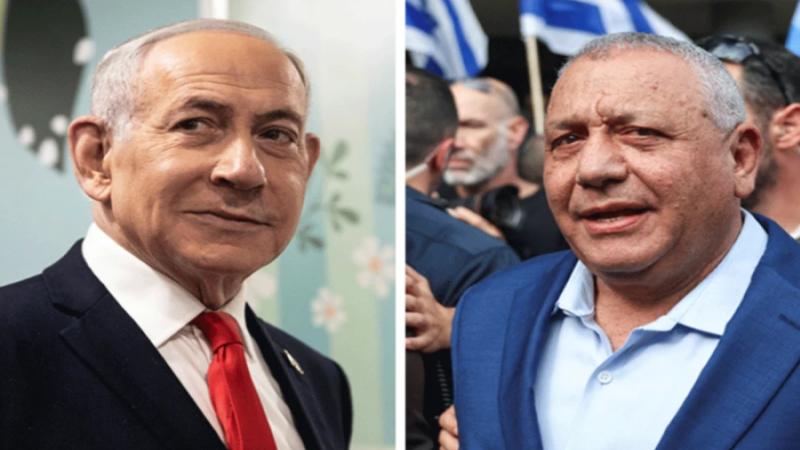
Nov 28, Kathmandu - Israeli Prime Minister Benjamin Netanyahu is preparing to offer opposition leader Gadi Eisenkot a rotating premiership as uncertainty over forming a new government grows, Israeli media report. The proposal has reportedly caused divisions within Netanyahu’s own office.
Channel 13 reported that Netanyahu is considering publicly expressing interest in a power-sharing arrangement with Eisenkot, while public broadcaster Kan said the offer is expected to be conveyed through informal channels.
Eisenkot remains wary of Netanyahu’s proposal and is continuing preparations to form and swear in a government next week. He has said he assured coalition partners Yair Golan, leader of the Democrats, and Avigdor Lieberman, head of Yisrael Beiteinu, that he would not join a unity government with Likud without their consent. Both have rejected joining a government led by Netanyahu.
Senior members of Naftali Bennett’s Beyachad party told Channel 13 that the party could oppose an Eisenkot-led government if it is formed before Bennett’s negotiations with Netanyahu conclude. Bennett has previously suggested he could consider other options if talks with Likud fail.
Eisenkot’s 28-day mandate to form a government, granted by President Isaac Herzog, expires on December 6. Eisenkot’s Yashar party, Golan’s Democrats and Lieberman’s Yisrael Beiteinu hold 36 of the Knesset’s 120 seats. With Bennett’s support, the four parties would have 48—short of the 61 needed for a majority. They would need backing from Likud, ultra-Orthodox factions or the Arab-majority Ra’am party.
According to Channel 12, Ra’am has offered to support security decisions by an Eisenkot-led government over a proposed four-year term in exchange for cabinet positions and investment in Arab communities. The party is also reportedly seeking posts for its leader, Mansour Abbas, and senior lawmaker Yoav Segalovitz, along with a crime-reduction plan and billions of shekels for development in Arab and mixed cities.
Ra’am has also called for a national project to regulate construction in Arab communities in the Negev. The party is said to be open to implementing some demands gradually after a government is formed, rather than joining the initial coalition.
Meanwhile, a senior figure in Eisenkot’s camp has challenged Bennett’s argument that a unity government with Likud could ease the burden on military reservists. The official said Netanyahu remains committed to his ultra-Orthodox allies and would include them in a unity government, with exemptions.
“Presenting unity with Likud as a solution to the reservists’ problem is wrong,” the official was quoted as saying by Channel 12, according to The Times of Israel. “In a government with Likud, both the ultra-Orthodox factions and Netanyahu would receive exemptions.”
Netanyahu Weighs Rotation Deal as Israel’s Coalition Talks Remain Uncertain













 Indian Rupee
 U.S. Dollar
 European Euro
 UK Pound Sterling
 Swiss Franc
 Australian Dollar
 Canadian Dollar
 Singapore Dollar
 Japanese Yen
 Chinese Yuan
 Saudi Arabian Riyal
 Qatari Riyal
 Thai Baht
 UAE Dirham
 Malaysian Ringgit
 South Korean Won
 Swedish Kroner
 Danish Kroner
 Hong Kong Dollar
 Kuwaity Dinar
 Bahrain Dinar