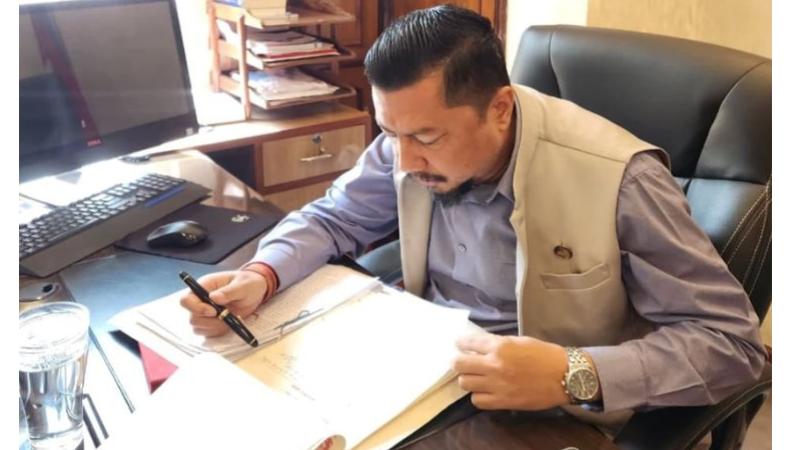
Oct 15, Kathmandu - For the first time, Nepal’s private sector will be allowed to prepare for cross-border electricity trading, following a decision by Energy, Water Resources and Irrigation Minister Biraj Bhakta Shrestha.
The ministerial decision, made on Friday, authorizes the ministry to issue letters of intent granting companies in-principle approval to explore opportunities in the regional power market. The move is being viewed as a significant step toward widening private investment and reforming Nepal’s energy sector.
Until now, private companies could build power projects and generate electricity, but they lacked a clear route to participate directly in cross-border electricity trade. Under the new arrangement, eligible firms may study the feasibility of trading, identify domestic and foreign partners, hold discussions and prepare agreements.
The letters of intent will allow companies to undertake preliminary work—not to begin trading. Formal electricity sales, implementation of power purchase agreements, transmission-capacity bookings and use of open access will still require the permits, approvals and technical arrangements prescribed by law.
The government has also set conditions to prevent misuse. Applicants must declare that they are not blacklisted under applicable laws, that their submitted information is accurate and that they do not intend to misuse the letter. The letter itself does not create a right to a trading licence or impose any obligation on the government through agreements between a company and its partners.
Companies must submit progress reports to the ministry within 15 days of the end of each quarter, covering completed work, progress against targets, challenges and plans. The ministry may request additional documents or explanations.
Any changes to a company’s ownership or shareholding structure will require prior approval where required by law. The government may suspend, revoke or amend a letter if its conditions are breached, submitted information is found to be false or misleading, or action is needed to protect the public interest or the safe operation of the electricity system.
Letters of intent will remain valid for the period set by law, up to a maximum of two years from the date of issue. Companies seeking an extension must apply at least 30 days before expiry, with a progress report and reasons for the request.
The government expects the decision to encourage new investment and business initiatives. By engaging with potential buyers and partners, private companies may gain a clearer understanding of market demand, prices, trading terms and risks—helping link future investment in power generation to market opportunities and move the sector toward a more market-oriented model.













 Indian Rupee
 U.S. Dollar
 European Euro
 UK Pound Sterling
 Swiss Franc
 Australian Dollar
 Canadian Dollar
 Singapore Dollar
 Japanese Yen
 Chinese Yuan
 Saudi Arabian Riyal
 Qatari Riyal
 Thai Baht
 UAE Dirham
 Malaysian Ringgit
 South Korean Won
 Swedish Kroner
 Danish Kroner
 Hong Kong Dollar
 Kuwaity Dinar
 Bahrain Dinar