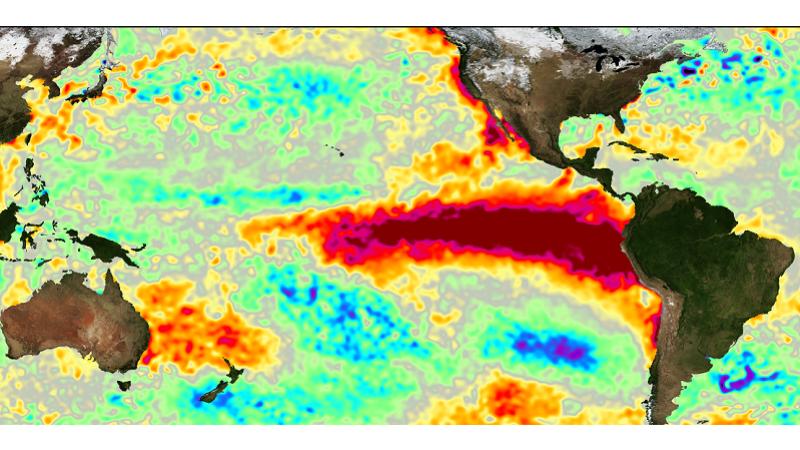
Oct 12, Kathmandu - Sea-surface temperatures in a key Pacific monitoring region reached a record high last September amid a powerful El Niño, prompting scientists to warn that global temperatures could set a new record in 2027.
The EU’s Copernicus Climate Change Service reported that temperatures in the Niño 3.4 region reached 29.70°C—higher than levels recorded during the strong El Niño events of 1982–83, 1997–98 and 2015–16. However, Copernicus cautioned that long-term ocean warming driven by climate change makes it difficult to conclude that the current El Niño is the strongest on record.
Last September, the global average sea-surface temperature reached 21.05°C, while the average global surface temperature was 16.27°C—1.63°C above the pre-industrial average.
Carlo Buontempo, director of Copernicus, said the powerful El Niño could keep monthly temperatures above 1.5°C over pre-industrial levels through 2027. Scientists say cutting greenhouse-gas emissions from fossil fuels is crucial to limiting further warming.
El Niño is the warming phase of a natural climate cycle. It raises Pacific Ocean surface temperatures, alters global wind and rainfall patterns, and can increase the risk of droughts and floods in different regions. The phenomenon typically occurs every two to seven years and lasts nine to 12 months.

















 Indian Rupee
 U.S. Dollar
 European Euro
 UK Pound Sterling
 Swiss Franc
 Australian Dollar
 Canadian Dollar
 Singapore Dollar
 Japanese Yen
 Chinese Yuan
 Saudi Arabian Riyal
 Qatari Riyal
 Thai Baht
 UAE Dirham
 Malaysian Ringgit
 South Korean Won
 Swedish Kroner
 Danish Kroner
 Hong Kong Dollar
 Kuwaity Dinar
 Bahrain Dinar