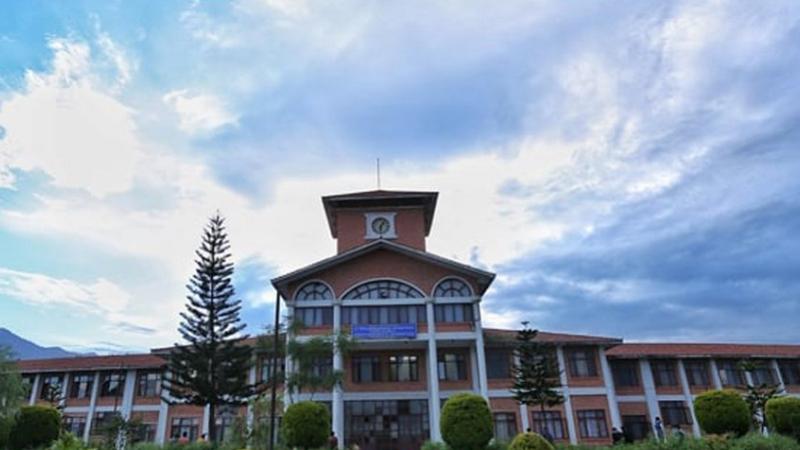
Oct 02, Kathmandu - Nepal’s oldest and largest university, Tribhuvan University (TU), has fallen further in the latest Times Higher Education (THE) World University Rankings, dropping to the 1,801–2,000 band for 2027.
TU was placed in the 1,501+ band in the previous two editions. The latest ranking, published on September 30, 2026, marks another decline for the university.
TU first entered THE’s global rankings in 2019 in the 801–1,000 band. It remained in that range through 2023, aside from a brief shift to the 1,001–1,200 band in 2020. It then fell to 1,201–1,500 in 2024 and to 1,501+ in 2025. Because THE reports rankings in broad bands rather than exact positions, the precise scale of TU’s decline cannot be determined.
The drop does not necessarily mean that the overall quality of TU’s academic departments has deteriorated. THE changed its assessment methodology in 2024, incorporating measures of teaching, research environment, research quality, industry engagement and international outlook. TU had previously said the revised methodology affected its results. However, its continued placement in lower bands has intensified concerns.
TU’s overall THE score rose from 23.05 to 23.52 in 2026, but its ranking remained in the 1,501+ band. The university said it had formed a committee to improve data entry and reporting, which it said contributed to the score increase.
Subject rankings offer a more mixed picture. In THE’s 2026 subject rankings, TU placed in the 601–800 band for medical and health, 801–1,000 for social sciences, and 1,001–1,250 for engineering. This suggests that some subject areas perform better than the university’s overall ranking indicates.
TU’s scale is also an important factor: according to THE, it has around 400,000 students, with central departments, constituent campuses and affiliated colleges across Nepal. Managing research output, attracting international students and faculty, strengthening research impact and improving institutional data systems remain major challenges.
The university scored 41.3 in research quality and 43.1 in international outlook. Its teaching score has improved steadily, rising from 9.2 in 2019 to 12.8 in 2023 and 16.5 in the 2027 data. But its research environment score stood at just 9.2, pointing to persistent weaknesses in research conditions and international collaboration.
TU’s latest ranking has become more than a setback in an international league table. It has raised broader questions about Nepal’s higher-education research capacity, internationalisation and institutional reform. The challenge for TU is not simply to climb out of the 1,801–2,000 band, but to make lasting improvements in the areas driving its performance.












 Indian Rupee
 U.S. Dollar
 European Euro
 UK Pound Sterling
 Swiss Franc
 Australian Dollar
 Canadian Dollar
 Singapore Dollar
 Japanese Yen
 Chinese Yuan
 Saudi Arabian Riyal
 Qatari Riyal
 Thai Baht
 UAE Dirham
 Malaysian Ringgit
 South Korean Won
 Swedish Kroner
 Danish Kroner
 Hong Kong Dollar
 Kuwaity Dinar
 Bahrain Dinar