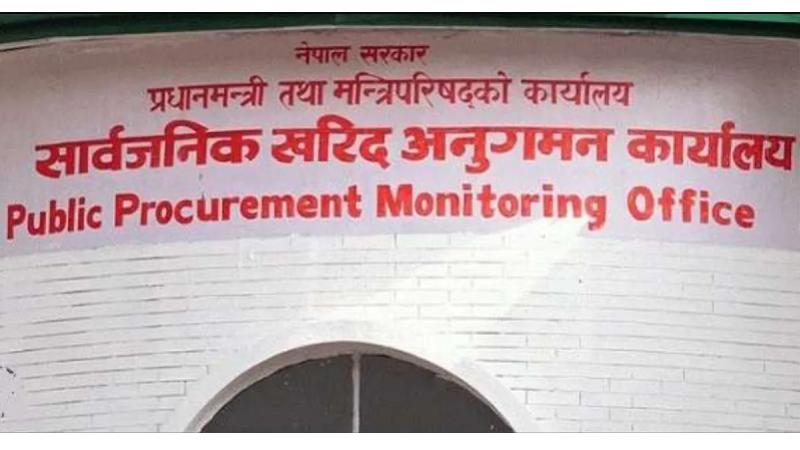
Sep 14, Kathmandu - Nepal has reverted to traditional paper-based procurement procedures after suspending its electronic government procurement system due to cybersecurity concerns. The Public Procurement Monitoring Office announced on Bhadra 11 that, until further notice, all new tenders, expressions of interest, and sealed bid processes must be conducted manually.
Following the shutdown of the electronic procurement platform, construction companies, suppliers, and consultants are now required to physically submit their documents at relevant offices for work that can traditionally be handled online. This shift has led to increased time, manpower, and administrative costs, while also complicating bid opening, evaluation, and deadline management.
Ram Prasad Acharya, Deputy Secretary and Spokesperson of the Public Procurement Monitoring Office, explained that the system was temporarily halted after serious security vulnerabilities were identified. He assured that technical experts are working on system maintenance, security enhancements, and upgrades, with a goal to restore a secure system within approximately a month.
Shiva Hari Ghimire, Secretary General of the Nepal Construction Business Federation, expressed concern that reverting to manual processes would lead to higher costs and time delays for businesses, along with increased security risks. He warned that physical procurement procedures could also heighten pressure, threats, and opportunities for collusion.
The suspension of the electronic procurement system has also impacted contract procedures for flood-affected areas, urban development projects, water supply initiatives, and other infrastructure reconstruction efforts. Experts note that Bhadra and Ashwin are crucial months for budget implementation and tender announcements in Nepal; halting the digital system at this time could hinder the progress of major government projects.
Previously, the system was also investigated by the Central Investigation Bureau over unauthorized access and manipulation of tender details. The Public Procurement Monitoring Office cited cybersecurity risks as the official reason for its current suspension, emphasizing the need to safeguard sensitive procurement information.















 Indian Rupee
 U.S. Dollar
 European Euro
 UK Pound Sterling
 Swiss Franc
 Australian Dollar
 Canadian Dollar
 Singapore Dollar
 Japanese Yen
 Chinese Yuan
 Saudi Arabian Riyal
 Qatari Riyal
 Thai Baht
 UAE Dirham
 Malaysian Ringgit
 South Korean Won
 Swedish Kroner
 Danish Kroner
 Hong Kong Dollar
 Kuwaity Dinar
 Bahrain Dinar