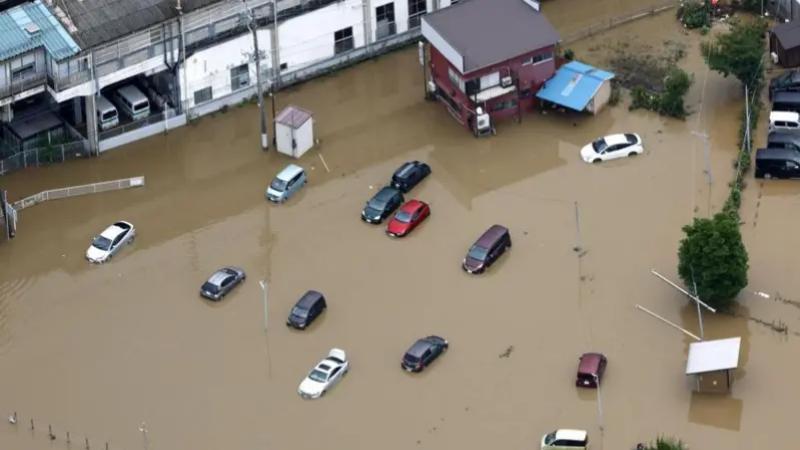
Aug 14, Kathmandu - In the wake of what is being described as Japan's most severe rainfall in history, at least four people have lost their lives in Chiba Prefecture near Tokyo. The relentless downpour has triggered widespread flooding and landslides, crippling transportation and power supplies across the region.
According to the Japan Meteorological Agency, Chiba experienced over 100 millimeters of rain per hour starting Thursday afternoon. The volume of rainfall has been three times higher than the seasonal average for August and marks the heaviest rainfall recorded in Japan’s meteorological history.
Local disaster management authorities confirmed that four fatalities resulted from floodwaters drowning roads and trapping individuals inside vehicles.
Tokyo's International Airport and Transportation Paralyzed
Tokyo’s Narita International Airport has been severely impacted, with approximately 7,000 travelers stranded overnight due to disruptions in rail, bus, and road transport. Many passengers were forced to sleep on terminal floors amid the chaos. Additionally, thousands of commuters are stranded at various stations and shopping malls, while several major highways remain closed.
Power Outages and Emergency Response
Over 23,000 households across Chiba, Ibaraki, and Tochigi prefectures have lost electricity following the heavy rains. Authorities have evacuated residents from flooded areas to safe locations and government buildings. The Japanese military has been mobilized for rescue operations to assist those affected.
Japan's Worst Weather Disaster in Recent Memory
Chiba Governor Toshihito Kumagai described the event as “the most extraordinary and catastrophic weather disaster in Japan’s history.” He expressed condolences to the victims and assured that the government’s primary focus is on saving lives and conducting rescue efforts.
Although the Japan Meteorological Agency downgraded its emergency warning from the highest ‘Level 5’ to ‘Level 4,’ residents near rivers and in flood-prone areas are urged to remain highly vigilant as further heavy rainfall and landslides are anticipated.

















 Indian Rupee
 U.S. Dollar
 European Euro
 UK Pound Sterling
 Swiss Franc
 Australian Dollar
 Canadian Dollar
 Singapore Dollar
 Japanese Yen
 Chinese Yuan
 Saudi Arabian Riyal
 Qatari Riyal
 Thai Baht
 UAE Dirham
 Malaysian Ringgit
 South Korean Won
 Swedish Kroner
 Danish Kroner
 Hong Kong Dollar
 Kuwaity Dinar
 Bahrain Dinar