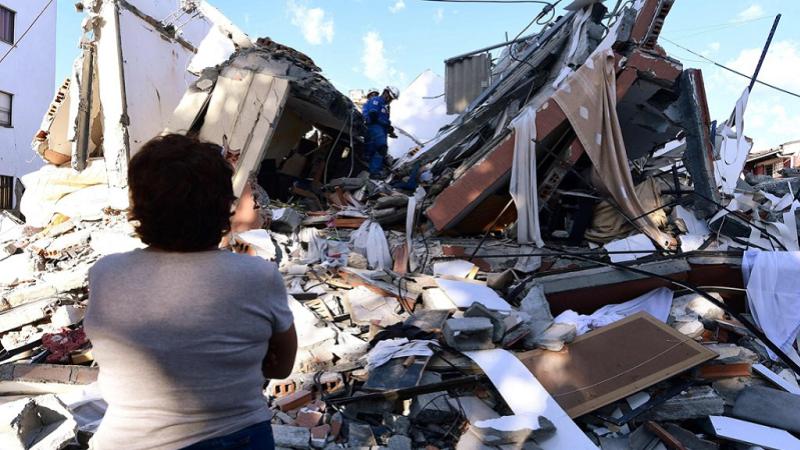
Aug 13, Kathmandu - In the powerful earthquake that struck western Colombia last Monday, the death toll has risen to 265, with ongoing search efforts for approximately 500 people still missing amidst the rubble.
Despite continuous aftershocks complicating rescue and search operations, security and rescue teams are persistently working in the affected regions to locate survivors and assess damage.
Colombian President Gustavo Petro addressed the nation via television, announcing the establishment of an emergency fund for the reconstruction of hospitals, schools, homes, and other damaged infrastructure. He also declared a state of economic emergency to address the disaster’s impact. However, he did not specify immediate actions under this declaration.
According to President Petro, over 25,800 families have been affected by the earthquake. Official figures report 3,770 injuries and damage to more than 9,550 homes.
The cities of Pereira and Cali, major centers for Colombia’s coffee production, have suffered significant losses, with 83 and 74 deaths respectively. Authorities confirmed extensive damage across other affected areas as well.
The Colombian Geological Survey reports that since the main quake, 130 aftershocks have been recorded, further hampering rescue efforts. The continual tremors make it difficult for teams to access collapsed structures and rescue trapped individuals.
The earthquake, measuring 7.4 magnitude, struck western Colombia on August 10, causing widespread destruction in Cali, Pereira, Manizales, and remote villages in Chocó. The challenging terrain has further hindered relief and rescue operations.
This quake is considered one of the strongest in Colombia in the 21st century. The extensive destruction and ongoing aftershocks have posed significant risks to rescue workers, who continue to operate in dangerous conditions to save lives.
The government has prioritized immediate relief for affected families and reconstruction of damaged infrastructure. Search and rescue efforts remain the top focus, alongside treatment for the injured and support for displaced families.





 Indian Rupee
 U.S. Dollar
 European Euro
 UK Pound Sterling
 Swiss Franc
 Australian Dollar
 Canadian Dollar
 Singapore Dollar
 Japanese Yen
 Chinese Yuan
 Saudi Arabian Riyal
 Qatari Riyal
 Thai Baht
 UAE Dirham
 Malaysian Ringgit
 South Korean Won
 Swedish Kroner
 Danish Kroner
 Hong Kong Dollar
 Kuwaity Dinar
 Bahrain Dinar