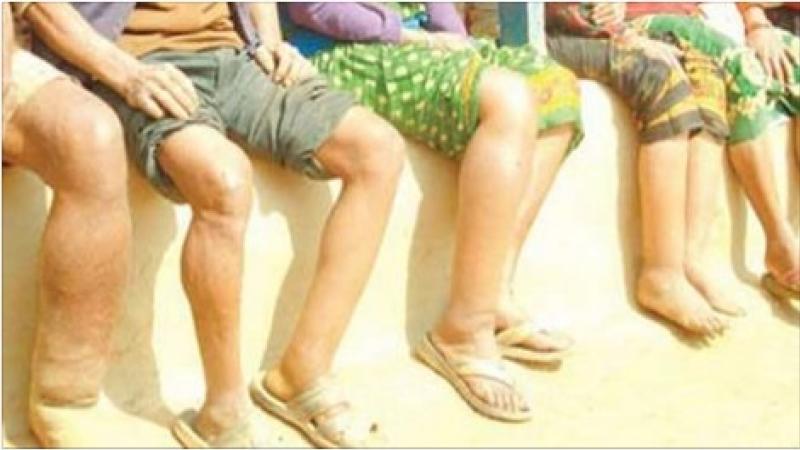
Jul 02, Kathmandu - The Ministry of Health and Food Safety has initiated a comprehensive study on the parasites responsible for elephantiasis, a disease caused by parasitic worms. The Center for Parasitic Disease Research and Training has begun investigating whether these parasites infect humans, focusing on school-aged children.
Dr. Bhim Prasad Sapkota, director of the center, announced that the study has commenced in 240 schools across Ilam, Panchthul, and Tehrathum districts, targeting students in grades 1 and 2, primarily children aged seven. Health workers are collecting blood samples from these students to analyze the presence of the parasites.
A total of 1,570 students from Ilam and Panchthul and 1,410 from Tehrathum are participating in the testing, with a dedicated team of 65 health professionals conducting the blood collection.
The parasites under investigation include Uncaria bacrofti, Brugia malayi, and Brugia timori, which are known to cause elephantiasis. According to Dr. Sapkota, the parasites have been previously linked to cases in Nepal, primarily through infections caused by Uncaria bacrofti.
“Local residents in these districts have taken the anti-parasitic medication six times to combat elephantiasis. We are now studying whether children who did not take the medication are infected,” he explained. “This study focuses on children born after 2019.”
Nepal has reported affected cases in 63 districts, with the disease caused by the parasitic worms transmitted through bites of infected mosquitoes, particularly of the Culex genus, which inject the parasites into humans.
Dr. Sapkota added that in the upcoming fiscal year, further studies will be conducted in other districts at risk, aiming to better understand and control the spread of this disease caused by tiny thread-like worms.













 Indian Rupee
 U.S. Dollar
 European Euro
 UK Pound Sterling
 Swiss Franc
 Australian Dollar
 Canadian Dollar
 Singapore Dollar
 Japanese Yen
 Chinese Yuan
 Saudi Arabian Riyal
 Qatari Riyal
 Thai Baht
 UAE Dirham
 Malaysian Ringgit
 South Korean Won
 Swedish Kroner
 Danish Kroner
 Hong Kong Dollar
 Kuwaity Dinar
 Bahrain Dinar