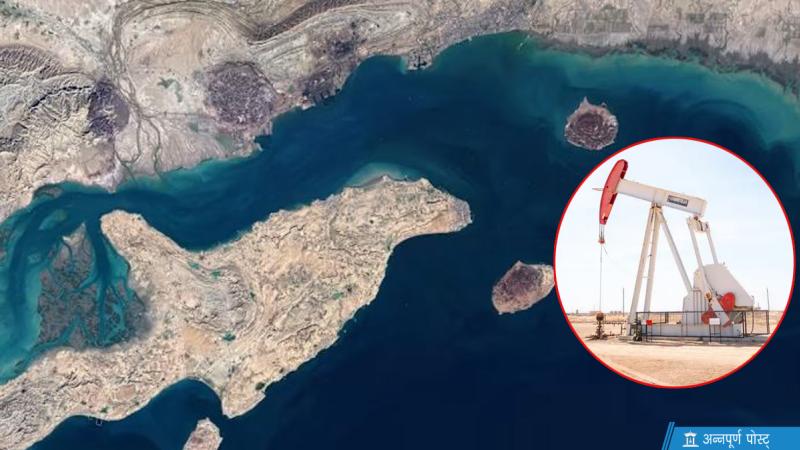
Apr 27, Kathmandu - Despite Iran's proposal to unblock the Strait of Hormuz, global oil prices continue to surge. Iran has suggested lifting the blockade in this vital waterway, which is crucial for worldwide fuel supply. However, instead of easing tensions, the move appears to be aimed at delaying nuclear negotiations with the United States.
Brent crude oil prices, considered an international benchmark, rose more than 1% on Tuesday. Tehran's proposal failed to reassure traders, as the Strait remains a strategic chokepoint for global energy transportation. According to local time, Brent oil hit $104.09 per barrel at 3:30 AM, marking an 11% increase compared to last Tuesday. Prior to this, prices had dipped below $104.
Iranian Foreign Minister Abbas Araghchi's suggestion to open the Hormuz Strait through Pakistan has triggered this price spike. This proposal comes amid stalled peace talks between the U.S. and Iran. The U.S. has yet to publicly comment on the proposal. It is believed that Iran’s move aims to delay contentious issues surrounding its nuclear program.
The threat to merchant ships by Iran over the past two months has significantly reduced traffic through the Strait, impacting global oil and natural gas supplies. Just Sunday, only 8 ships navigated the waterway—far fewer than the 19 ships that crossed the day before.
According to the United Nations Conference on Trade and Development (UNCTAD), before an attack by the U.S. and Israel on Iran on February 28, an average of 129 ships traversed this route daily. The blockade and attacks on energy infrastructure have decreased worldwide oil production by approximately 14.5 million barrels per day. Although the conflict has ended, shipping experts warn that restoring energy supplies may take months due to accumulated oil and gas, damaged infrastructure, and the need to remove Iranian mines from the sea routes.

















 Indian Rupee
 U.S. Dollar
 European Euro
 UK Pound Sterling
 Swiss Franc
 Australian Dollar
 Canadian Dollar
 Singapore Dollar
 Japanese Yen
 Chinese Yuan
 Saudi Arabian Riyal
 Qatari Riyal
 Thai Baht
 UAE Dirham
 Malaysian Ringgit
 South Korean Won
 Swedish Kroner
 Danish Kroner
 Hong Kong Dollar
 Kuwaity Dinar
 Bahrain Dinar