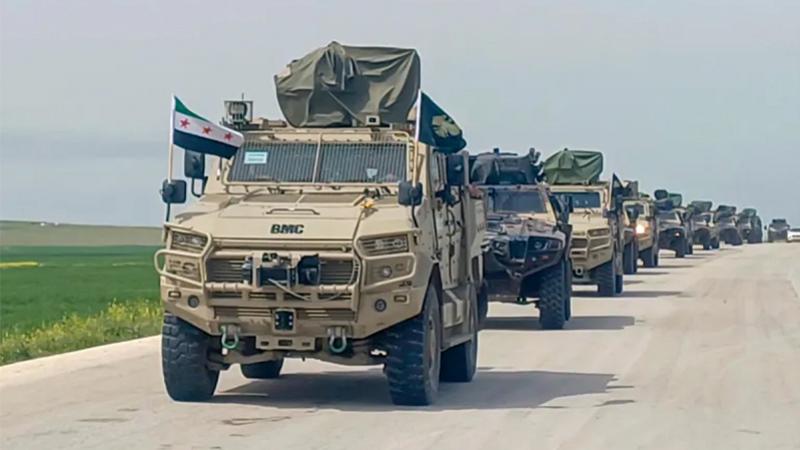
Apr 18, Kathmandu - The United States has officially concluded its 12-year military presence in Syria, with the final troops departing from the Hasakah-based Qasrak Air Base. According to the U.S. Central Command, nearly 2,000 American soldiers have now been transferred to Jordan.
The U.S. withdrawal has significantly impacted Syria's rebel Kurdish forces, particularly the Syrian Democratic Forces (SDF). Following the departure of the American security umbrella, the SDF has agreed with the Syrian government, leading to the integration of Kurdish fighters into the Syrian national army.
Government troops are now stationed in key towns such as Hasakah and Qamishli, while major oil and gas fields like Al-Umar and Kurnoj have come under government control, boosting Syria's economic prospects.
Turkey has long regarded the Syrian Democratic Forces as a terrorist organization. In light of the U.S. troop withdrawal, SDF has had to cooperate with the Syrian government to avoid potential attacks.
After decades of tension, relations between Syria and the U.S. have seen a dramatic improvement. Following the fall of Bashar al-Assad's regime in December 2024, Syria entered a new political phase. In May 2025, U.S. President Donald Trump held a historic meeting with Syrian counterpart Ahmed al-Sharabi in Saudi Arabia, leading to the lifting of most sanctions on Syria.
The bilateral relationship, which began in 1835 and was disrupted by the civil war in 2012, is now in the process of normalization. Despite the U.S. military's departure, security challenges in Syria remain.






 Indian Rupee
 U.S. Dollar
 European Euro
 UK Pound Sterling
 Swiss Franc
 Australian Dollar
 Canadian Dollar
 Singapore Dollar
 Japanese Yen
 Chinese Yuan
 Saudi Arabian Riyal
 Qatari Riyal
 Thai Baht
 UAE Dirham
 Malaysian Ringgit
 South Korean Won
 Swedish Kroner
 Danish Kroner
 Hong Kong Dollar
 Kuwaity Dinar
 Bahrain Dinar