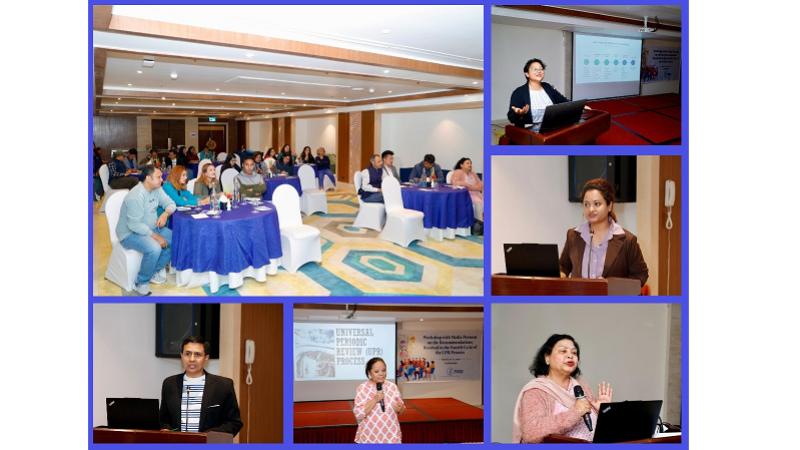
Mar 22, Kathmandu - During the Fourth Cycle of the Universal Periodic Review (UPR) conducted by the United Nations Human Rights Council, Nepal received significant suggestions from various countries emphasizing the implementation of key recommendations. The Women, Law, and Development Forum (WLDF) organized a workshop with journalists to raise awareness about the UPR process, highlight its national importance, and discuss Nepal’s main recommendations from the review.
The workshop focused particularly on legal identity, gender-based violence, and sexual and reproductive health and rights, facilitating in-depth discussions on these critical issues.
Nepal submitted its report to the UN Human Rights Council in 2025 for the Fourth Cycle of the UPR. Several countries provided suggestions based on this report, with Nepal being advised on three key themes. According to lawyer Binu Lama, Nepal has two options: to accept these suggestions or note them for future reference.
During the program, WLDF lawyer Roshina Shrestha highlighted important recommendations received by Nepal, including decriminalization of abortion, reproductive health rights, respectful childbirth services, comprehensive sexual education, and access to sexual and reproductive health services.
Regarding suggestions for Nepal, lawyer Shrestha noted that Iceland and France recommended making abortion completely non-criminal and legal, ensuring access to safe abortion services. Norway advised securing access to safe abortion for women, adolescents, and gender minorities.
Senior lawyer Mira Dhangana mentioned that countries also recommended strengthening multi-sectoral coordination to ensure comprehensive sexuality education inside and outside schools, prevent teenage pregnancies and child marriages, and effectively implement the 2021 national strategy against gender discrimination and unsafe abortion.
Other suggestions included banning the practice of Chhaupadi (period exile tradition) and dowry, raising awareness for effective law enforcement, and prosecuting offenders. Mexico proposed decriminalizing consensual sexual relations among minors under 18 and preventing teenage pregnancies and child marriages.
Discussions also covered future steps, as Nepal prepares to respond to UPR recommendations before the upcoming session scheduled for June/July 2026. The importance of creating informed public discourse and promoting accountability through media was also emphasized.
Kiran Kunwar moderated the event, with WLDF Information Officer Binod Chandra Devkota stressing that accepting and effectively implementing these recommendations is both a constitutional and international obligation of the Nepalese government.





 Indian Rupee
 U.S. Dollar
 European Euro
 UK Pound Sterling
 Swiss Franc
 Australian Dollar
 Canadian Dollar
 Singapore Dollar
 Japanese Yen
 Chinese Yuan
 Saudi Arabian Riyal
 Qatari Riyal
 Thai Baht
 UAE Dirham
 Malaysian Ringgit
 South Korean Won
 Swedish Kroner
 Danish Kroner
 Hong Kong Dollar
 Kuwaity Dinar
 Bahrain Dinar