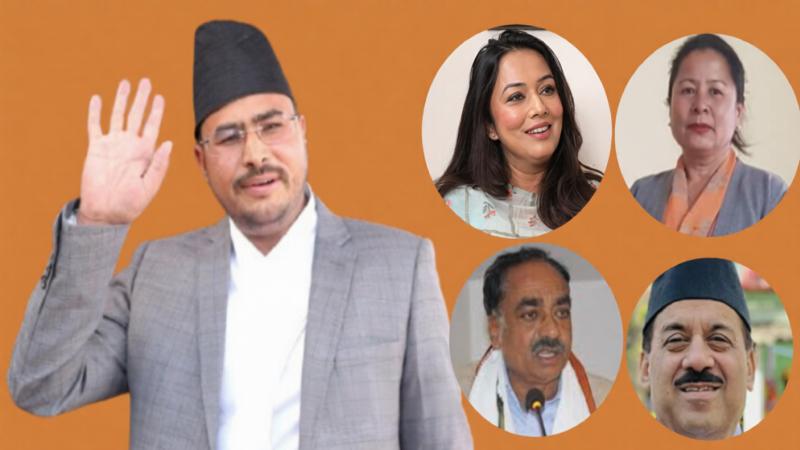
Mar 17, Kathmandu - Gyanendra Shahi, leader of the parliamentary faction of the Rastriya Prajatantra Party (RPP), is set to become the party’s new parliamentary leader after securing victory in the recent elections. Shahi was the sole candidate to win a direct seat from RPP, which has seen a decline in its overall performance this election cycle.
In the 2079 elections, RPP secured a total of 14 seats—7 directly elected and 7 through proportional representation. However, this time, the party’s tally has shrunk to 5 seats, with only 1 direct and 4 proportional seats, dropping from the fifth to the sixth-largest party in Parliament. The recently formed Labour Culture Party has gained ground, surpassing RPP, which has a long-standing history as a major political force.
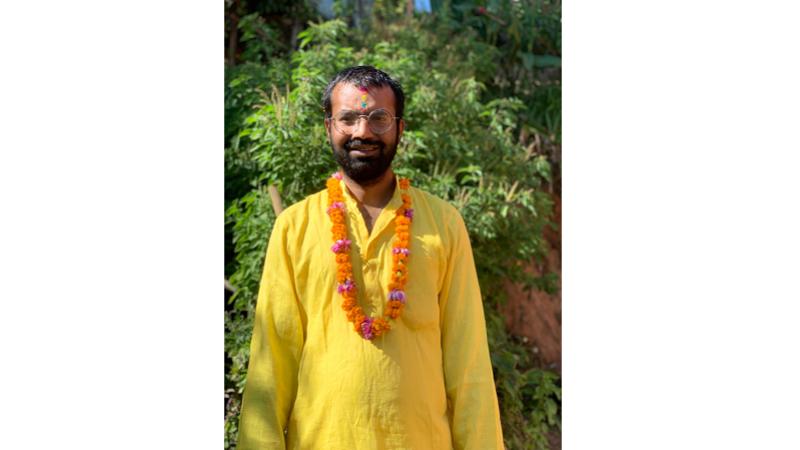
Shahi’s victory prevented RPP’s loss of its national status, which requires securing at least one direct seat under constitutional provisions. Had he lost, the party would have forfeited its recognition as a national party. Recognizing his contribution, party leader Rajendra Lingden welcomed Shahi by placing a garland and scarf during a recent Central Committee meeting.
This marks Shahi’s second consecutive win from Jumla, a seat he retained despite the nationwide surge of the Rastriya Swatantra Party (RSP), whose candidate’s bail was revoked in Jumla, helping Shahi secure the victory. In the previous Parliament, Shahi played a prominent role as the chief whip of RPP, and with his experience and status as the only direct winner, he is poised to become the unquestioned leader of the party’s parliamentary group. An official decision by the party’s meeting is pending.
RPP spokesperson Mohan Shrestha also indicated that there is no doubt about Shahi’s leadership of the parliamentary group. Four members elected through proportional representation are all newcomers, including Khusbu Oli, a prominent woman leader from the Khas-Arya community. Her presence is expected to strengthen Shahi’s position in Parliament. Oli, renowned as an eloquent speaker, holds a Master’s degree in Conflict Management from Oxford University and previously ran for direct election but was unsuccessful.
Additionally, Saraswati Lama, a woman from the Indigenous group and wife of RPP Vice President Buddhiman Tamang, has secured a proportional seat—her first entry into Parliament. Lama had been on the proportional list in 2074 but did not become a member then. This time, she was placed as the top candidate among indigenous women, earning her a seat.
Bharat Giri, a Khas Arya male candidate and RPP’s leader in the Madhesh Province, was also elected. Giri, from Mahottari, holds a B.S. degree and is the chairman of Universal College.
The party has also selected Tahir Ali, a veteran leader, as a proportional representative from the Muslim community. Ali is currently serving as the assistant general secretary of RPP.
RPP spokesperson Shrestha emphasizes that despite being a smaller party, RPP will be active and vocal in Parliament. “Our party’s size may have decreased, but our ideas and agenda remain strong,” he stated. “All five of our MPs will be present and assertive in the House.”



 Indian Rupee
 U.S. Dollar
 European Euro
 UK Pound Sterling
 Swiss Franc
 Australian Dollar
 Canadian Dollar
 Singapore Dollar
 Japanese Yen
 Chinese Yuan
 Saudi Arabian Riyal
 Qatari Riyal
 Thai Baht
 UAE Dirham
 Malaysian Ringgit
 South Korean Won
 Swedish Kroner
 Danish Kroner
 Hong Kong Dollar
 Kuwaity Dinar
 Bahrain Dinar