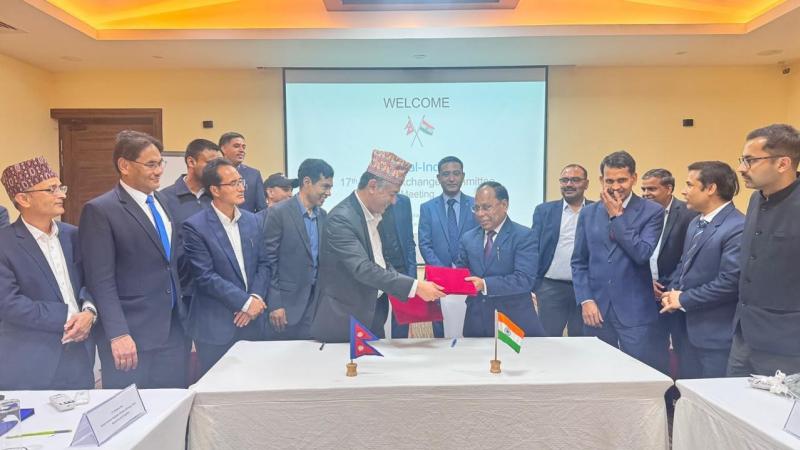
Mar 13, Kathmandu - Nepal and India successfully concluded their 17th Nepal-India Electricity Exchange Committee (PEC) meeting in Pokhara. Held over two days on Falgun 28-29, the meeting established electricity import rates for Nepal from various Indian states over the coming year.
During the discussions, Nepal and India reached an agreement on importing electricity from the states of Bihar, Uttar Pradesh, and Uttarakhand. The process of purchasing electricity through PEC has been ongoing since 1992, and this recent meeting finalized the applicable rates for the next year.
Nepal’s delegation was led by Hitenendra Dev Shakya, Executive Director of Nepal Electricity Authority (NEA), while India’s side was represented by Vijay Kumar Singh, a member of the Central Electricity Authority (CEA) Board, overseeing power systems.
The NEA’s Board of Directors authorized the Executive Director to negotiate and sign the electricity purchase agreement during the meeting.
During the two-day deliberations, India proposed a 5.5% increase in electricity rates, citing increased costs. However, Nepal’s studies indicated a decline in Indian electricity market prices, leading Nepal to argue for a reduction in rates.
Ultimately, both parties agreed to increase the existing rates by only 1.5%, maintaining the same rate as the previous year. Accordingly, the electricity purchase rate for this year has been set at Rs. 8.22 per unit for 132 kV transmission, Rs. 8.91 per unit for 33 kV, and Rs. 9.55 per unit for 11 kV. The two sides also agreed to revisit and discuss the rate structure in the coming year.
This agreement is expected to ensure reliable electricity supply during the dry season in March and April. Currently, NEA imports approximately 12,000 to 14,000 MWh daily, with projections indicating an increase in this volume.
Amid regional tensions and conflicts in the Middle East, which have strained energy markets, this timely agreement is viewed as a significant step toward stabilizing Nepal’s electricity supply.
The meeting was attended by Deputy Secretary Sanjeev Rai from the Ministry of Energy, Water Resources, and Irrigation, representatives from the Ministry of Foreign Affairs, and First Secretary Shekhar Suman of the Indian Embassy in Kathmandu.
At the conclusion, both sides expressed confidence that this agreement would further strengthen energy cooperation between Nepal and India, fostering long-term friendly relations.







 Indian Rupee
 U.S. Dollar
 European Euro
 UK Pound Sterling
 Swiss Franc
 Australian Dollar
 Canadian Dollar
 Singapore Dollar
 Japanese Yen
 Chinese Yuan
 Saudi Arabian Riyal
 Qatari Riyal
 Thai Baht
 UAE Dirham
 Malaysian Ringgit
 South Korean Won
 Swedish Kroner
 Danish Kroner
 Hong Kong Dollar
 Kuwaity Dinar
 Bahrain Dinar