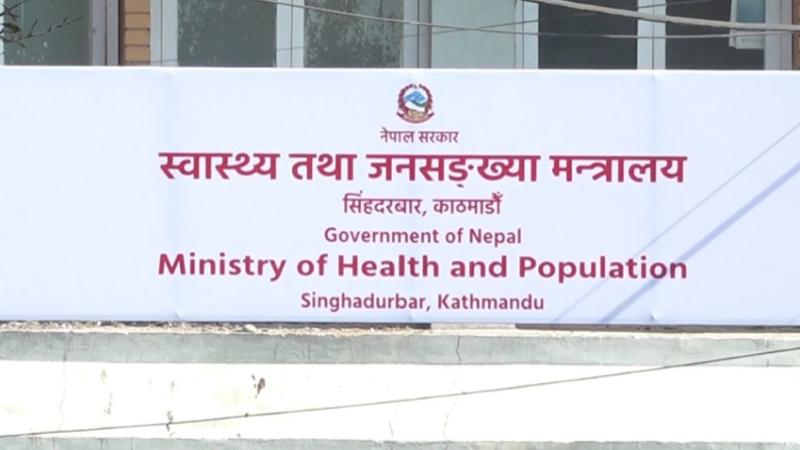
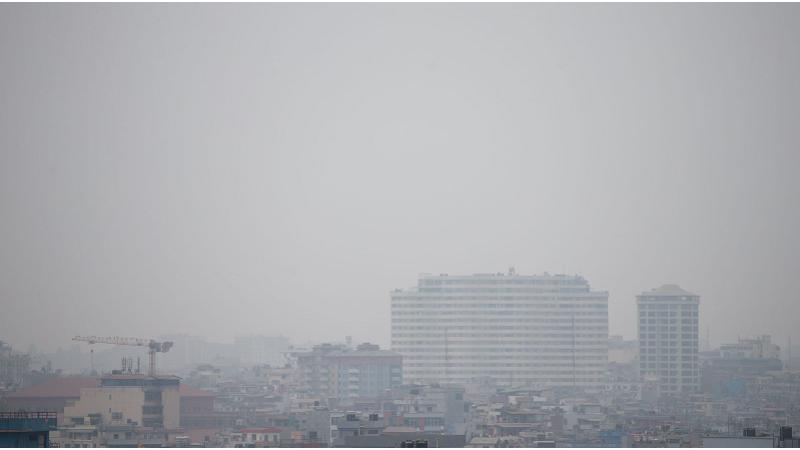
Mar 10, Kathmandu - As air pollution levels soar to alarming heights in Kathmandu Valley and major cities across the country, the Ministry of Health and Population has issued a nationwide alert, urging citizens to adopt strict safety measures.
According to the ministry, the concentration of harmful particulate matter (PM 2.5) has significantly increased in Kathmandu, Pokhara, Biratnagar, and various Terai regions, posing serious health risks. The tiny particles that penetrate the lungs and skin can cause long-term health issues, especially for the elderly, pregnant women, children under five, and individuals with pre-existing health conditions.
Dr. Prakash Budathoki, spokesperson for the ministry, warned that exposure to pollution can lead to eye irritation, respiratory problems, and severe diseases such as heart, kidney, and lung disorders. Long-term exposure could even increase the risk of cancer. The ministry strongly recommends avoiding outdoor activities during early mornings and evenings when pollution levels peak.
Dr. Budathoki emphasized that harmful particles tend to accumulate in the lower atmosphere during dawn and dusk, making morning and evening walks potentially hazardous. Citizens are advised to wear quality masks, protective glasses, and full-body clothing and headgear to shield themselves from pollutants when venturing outside.
The health ministry is coordinating with other relevant agencies—including the Ministries of Industry, Physical Infrastructure, Agriculture, Forests, and Environment—to combat pollution. They are actively discussing measures to curb emissions from vehicles, factories, pesticide use in agriculture, improper waste disposal, plastic burning, and forest fires.
The ministry warns that unless these sources are controlled, pollution will remain a persistent threat. For now, the best course of action is to protect oneself from the immediate health impacts by minimizing exposure and taking necessary precautions.











 Indian Rupee
 U.S. Dollar
 European Euro
 UK Pound Sterling
 Swiss Franc
 Australian Dollar
 Canadian Dollar
 Singapore Dollar
 Japanese Yen
 Chinese Yuan
 Saudi Arabian Riyal
 Qatari Riyal
 Thai Baht
 UAE Dirham
 Malaysian Ringgit
 South Korean Won
 Swedish Kroner
 Danish Kroner
 Hong Kong Dollar
 Kuwaity Dinar
 Bahrain Dinar